
Start Here!


🌎 START HERE
What kind of future should humanity build?
↓
1. THE VISION
Introduction to Type I Civilization
↓
2. THE HUMAN
Rationality + Intuition + Wisdom
↓
3. THE SYSTEM
How civilization actually works
↓
4. THE TECHNOLOGY
AI + science + space + innovation
↓
5. THE FUTURE
What humanity could become
Then your 29 books/250 Articles become a library,
The Path to a Type I Civilization
What is a Type I Civilization?
Based on the Kardashev scale, a Type I Civilization (planetary civilization) has achieved the ability to harness and control all the energy available on its home planet. This includes capturing total solar energy hitting the surface, managing planetary weather systems, utilizing geothermal and ocean currents, and maintaining sustainable, closed-loop material cycles. Quantitatively, this represents an energy consumption rate of roughly $4 \times 10^{19}$ ergs per second (or about $4 \times 10^{12}$ watts).
Where Humanity is Today
Humanity currently sits at approximately 0.73 on the Kardashev scale, operating largely as a planetary-dominant species still dependent on fossil fuels. While we have achieved global instantaneous communication, digital networks, and early space exploration, our energy infrastructure remains fragmented, and our governance structures are bound by localized, tribal, and national boundaries rather than planetary imperatives.
The Major Barriers
Reaching Type I status requires overcoming critical bottlenecks across technological, biological, and sociopolitical domains:
Energy: Moving past finite hydrocarbon extraction to achieve clean, scalable energy abundance through advanced solar, next-generation nuclear fission, and commercial nuclear fusion, coupled with planetary-scale storage solutions.
Artificial Intelligence: Ensuring that hyper-advanced AI systems are safely aligned with human survival and flourishing, transforming AI from a commercial tool into an infrastructural pillar for complex systems management.
Education: Dismantling outdated, industrial-era educational models and replacing them with frameworks that cultivate systems thinking, cognitive flexibility, and multi-disciplinary synthesis.
Governance: Evolving beyond fragmented nation-states and zero-sum geopolitics to establish resilient, adaptive, planetary-scale governance frameworks capable of managing global commons.
Human Intelligence & Rationality: Mitigating evolutionary cognitive biases, short-termism, and polarization to foster a culture of rigorous long-term rationality and collective problem-solving.
Intuition: Bridging the gap between empirical data and tacit, non-linear human intuition, leveraging both to navigate unprecedented systemic complexity.
Space: Lowering the barrier to escape velocity, establishing sustainable off-world supply chains, and transforming humanity into a multi-planetary species to secure evolutionary redundancy.
Civilization-Scale Cooperation: Overcoming competitive game-theoretic traps where individual actors defect for short-term gain at the expense of planetary stability.
The 90-Year Vision
The trajectory toward Type I status over the next century hinges on a synchronized leap in technology and consciousness. By the end of this period, humanity must transition its primary energy grids to renewables and fusion, integrate governance through decentralized planetary protocols, and align cognitive capacities—augmented by safe AI—to manage global systems seamlessly. Achieving Type I is not merely an engineering milestone; it is a fundamental maturation test for intelligent life.
Leonardo Mora
CEO of Vision
GAWK Corporation.
___________________________________________
What to do Next?
Subscribe to us at gawkc.com and scroll down to the bottom.
Read the First books
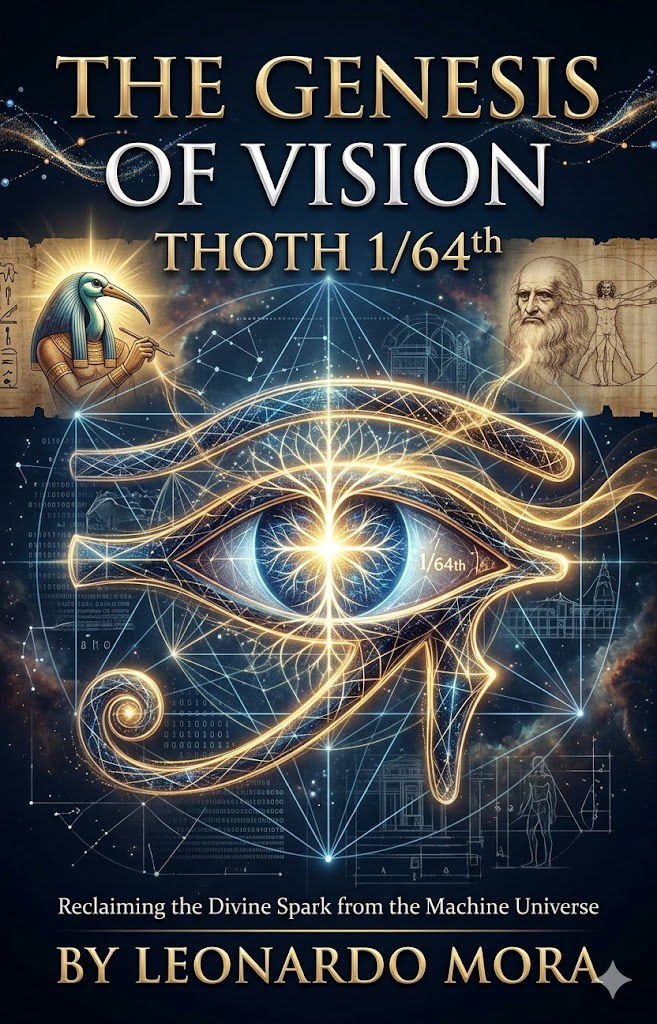
Gawkc.com/ebooks, grab The Genesis of Vision and then The Two Pillars of Knowing
Other books at thecrossoverbookshelf.com/shop
Browse our massive and free article catalogue at gawkc.com/blog and thecrossoverbookshelf.com/blog
Advocate for us: Share this newsletter with friends you know will like the topic of Type I Civilization.


Comments